
Last updated November 15, 2026
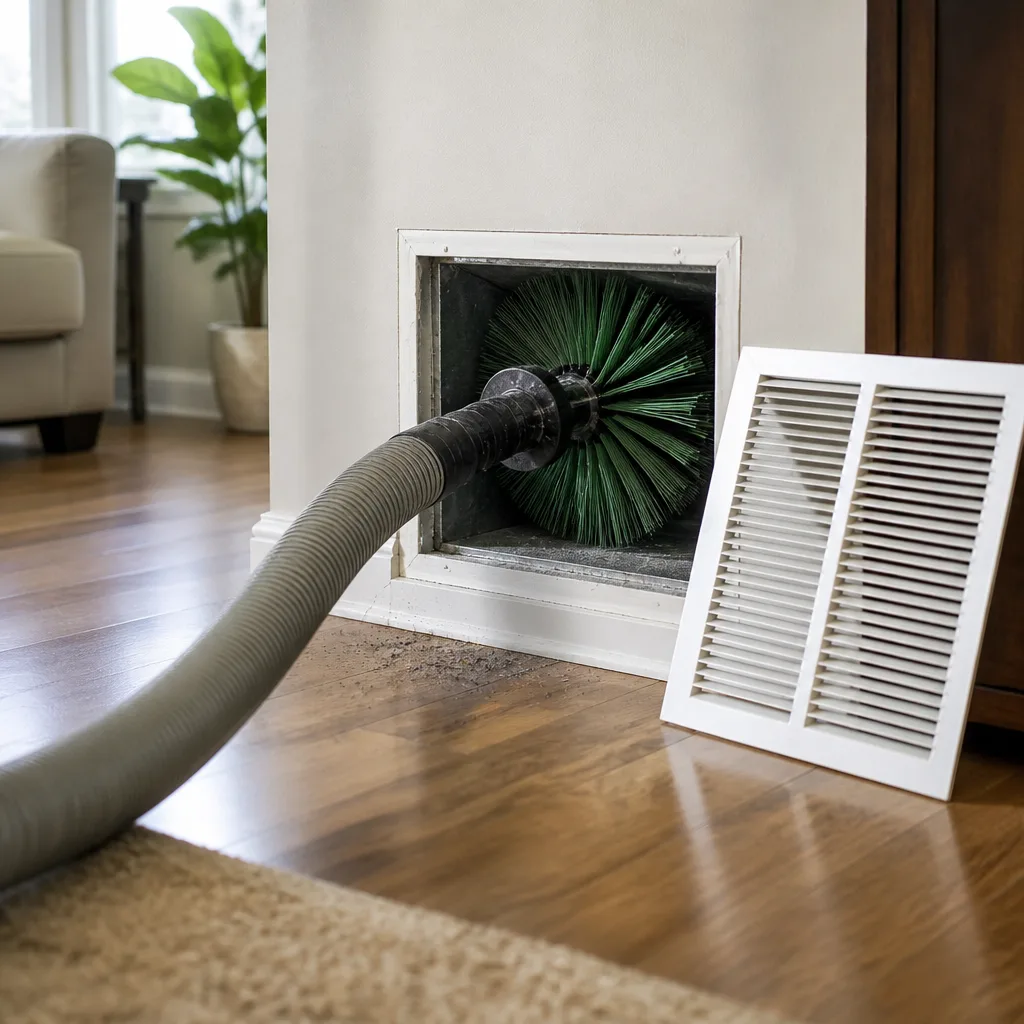 Whole-home duct cleaning
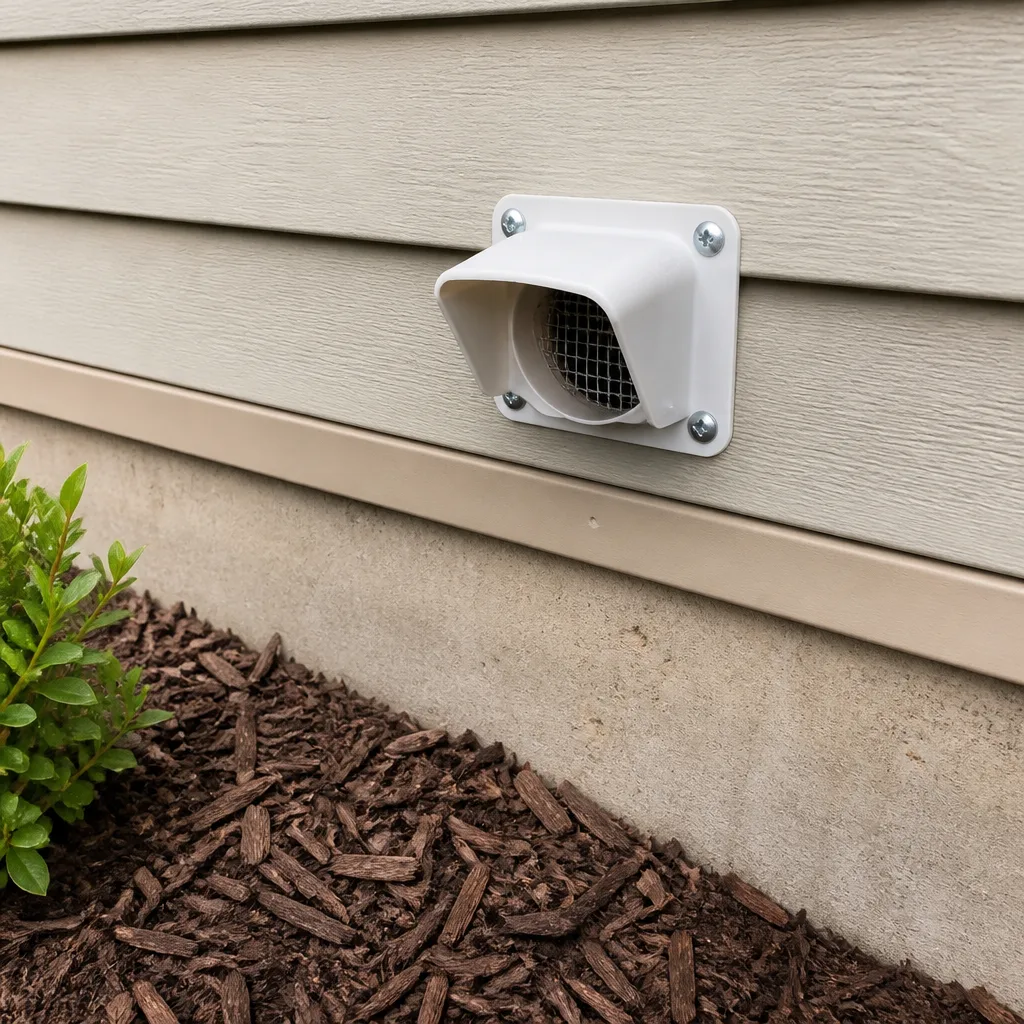 Dryer vent cleaning
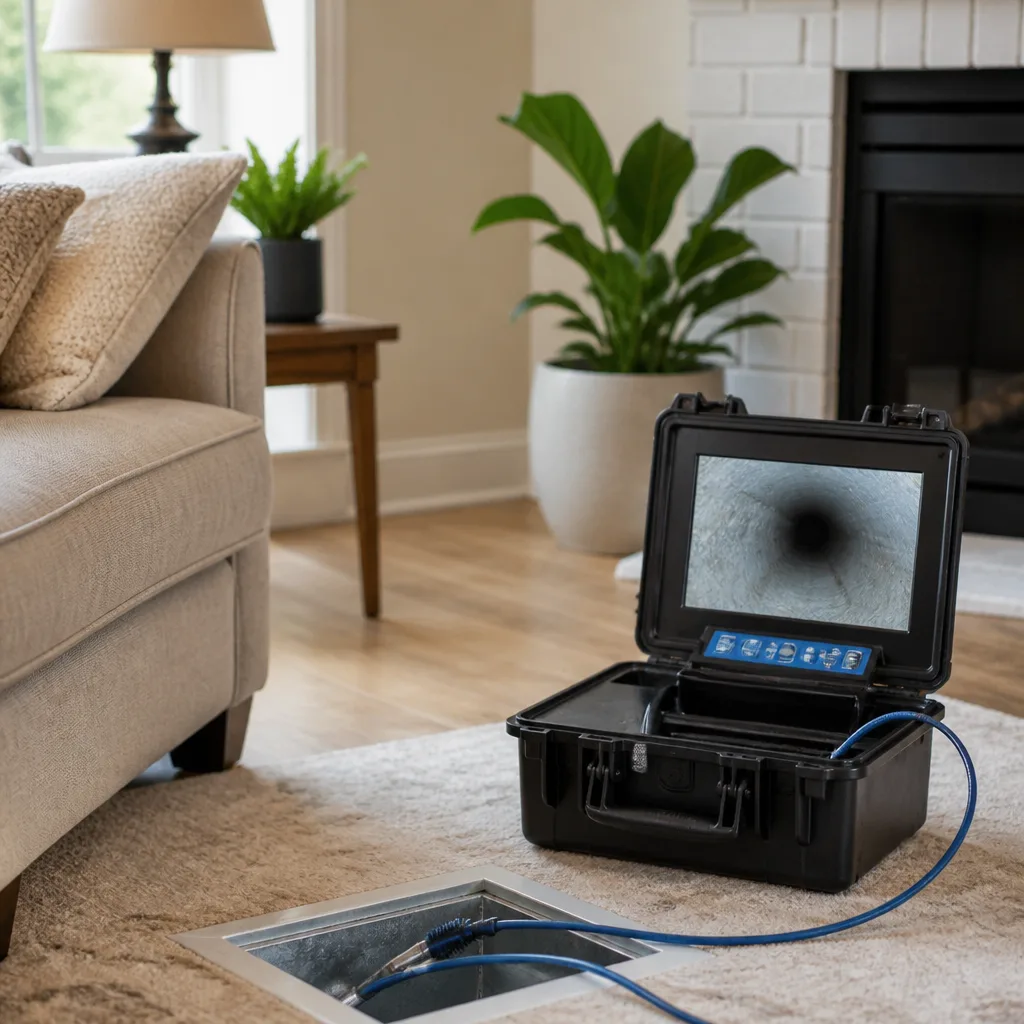 Camera inspection
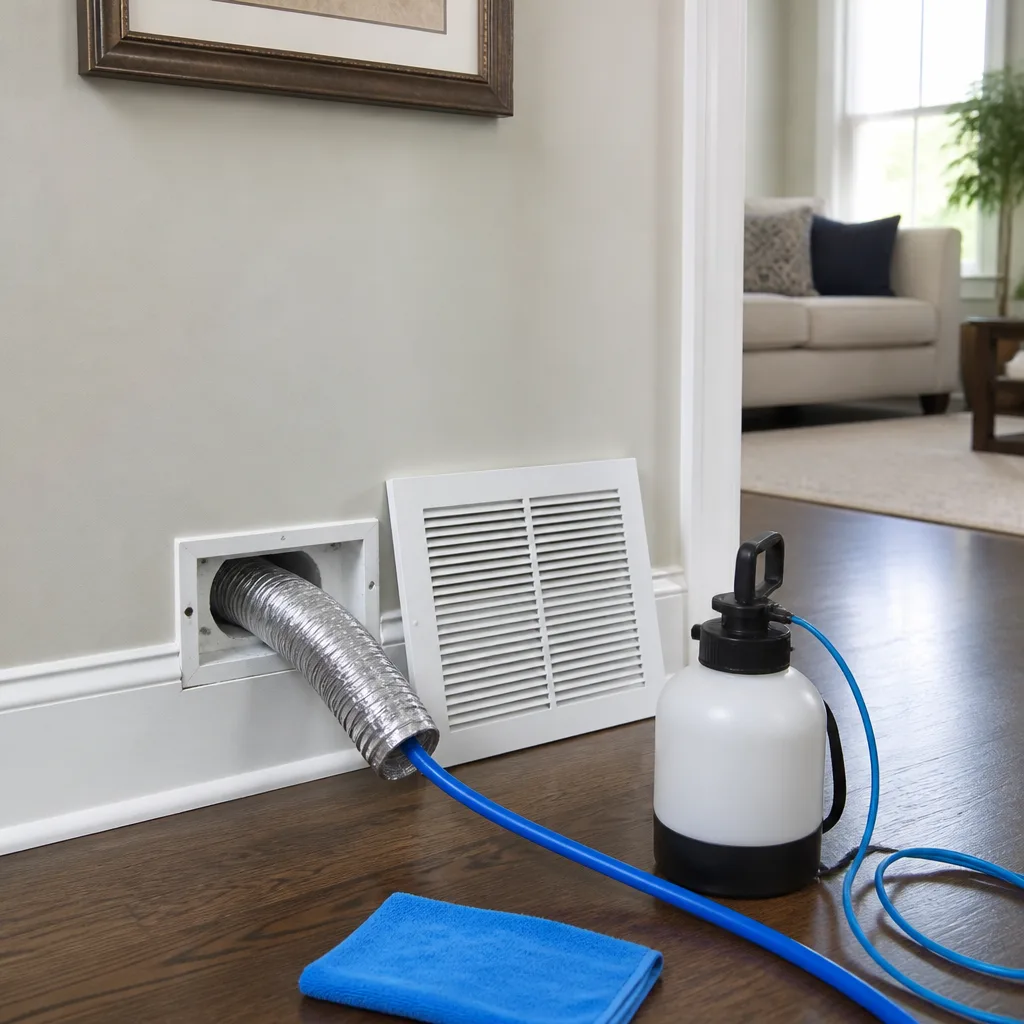 Sanitizing & deodorizing
Whole-system duct and dryer vent check with before-and-after photos - you see exactly what came out of your vents
That "$99 whole-house special" is a bait ad - the real number appears once they are in your hallway, or the "clean" is a shop-vac at the register. We photograph the inside of your ducts before and after instead.
Air Duct Cleaning Warning Signs: A Vacaville Homeowner’s Reference Guide
By the time you can see dust blowing from a register or smell something odd when the furnace kicks on, the contamination event is already weeks or months old. That’s the uncomfortable truth most warning-sign checklists skip. The signals that actually protect your home show up much earlier and much quieter: a bedroom that never quite keeps up, a filter that loads faster than it should, a faint smell you can’t place. This guide walks through the early performance signals worth documenting in a Vacaville home, and what each one is telling you about the duct system behind your walls.
Quick Answer
The most reliable early warning signs of dirty or failing ducts in Vacaville are airflow asymmetry (one side of the house consistently harder to condition), filters loading well before their rated interval, odor changes at startup, condensation at registers in summer, and fine dust trails after attic or renovation work. Visible mold or vermin are late-stage signs. If you’re seeing any of the early signals, the next step is an inspection, not a panic call.
Styles & brands we work with
- Whole-home duct cleaning
- Dryer vent cleaning
- Camera inspection
- Sanitizing & deodorizing
Table of Contents
- Airflow Asymmetry: The Register Pressure Test
- Filter Loading Rate as a Diagnostic Tool
- Odor Differentiation: Four Smells and What They Mean
- Post-Renovation Contamination in Vacaville’s Tract Homes
- The Humidity Tell: Summer Condensation at Registers
- Visible Signs That Confirm What You Already Suspected
- How to Document Your Findings Before You Call
- Common Mistakes to Avoid
Airflow Asymmetry: The Register Pressure Test
When one side of your house is consistently harder to heat or cool than the other, most homeowners assume the HVAC unit is undersized or the thermostat is the problem. In our experience, uneven airflow across a duct system is one of the earliest signals that something has changed inside the ducts themselves: a partial blockage, a disconnected run in the attic, or a crushed flex duct that’s been gradually sagging for years. The building doesn’t announce it. It just quietly redistributes air.
You can measure this without any tools at all. It’s called a register pressure test, and it takes about ten minutes on a calm morning.
- Set the thermostat to fan-only mode so the blower runs without heating or cooling.
- Hold the back of your hand about an inch from each supply register, one at a time. Note the strength of the stream on a scale of one to five, in your head.
- Do the same for every return grille (the large openings, usually low on a wall or in the floor).
- Compare readings room to room. A consistent five on one side of the hallway and a strong second on the other is the asymmetry signal.
- Walk the perimeter of your home while the fan runs and listen. A whistling or hissing register often means the duct behind it is partially restricted.
In a Vacaville home, this test is most useful in late spring and early fall, when the temperature swing between morning and afternoon is largest. That’s when the system is cycling on and off most often and asymmetry becomes obvious. If the imbalance is systematic and stable across seasons, the ducts are the first place to look before anyone sells you a new unit.
The fix might be a simple repair to a disconnected or crushed run. Our air duct cleaning service is often the starting point, because a proper inspection along the way reveals whether the imbalance is contamination-related or structural. We repair what we find, which is one reason we offer duct repair alongside cleaning.
Filter Loading Rate as a Diagnostic Tool
If your filter is visibly dirty well before its rated interval, your duct system is communicating something. A 90-day filter that looks grey and matted in 30 days isn’t a sign that your filter is bad. It’s a sign that your ducts are either bypassing air around the filter frame or pulling unfiltered air in through return-side leakage. Both are contamination pathways that no amount of filter-changing will fix.
Here’s how to read your filter like a diagnostic instrument:
- Uniform grey loading at the rated interval: Normal. The system is filtering as designed.
- Loading in 30-40% of the rated interval: Elevated particulate. Either dirty ducts upstream or return-side leakage pulling air from an attic or wall cavity.
- Loading in only one area of the filter media: Bypass air. Air is going around the filter instead of through it, which means the frame or cabinet doesn’t seal properly.
- Dark streaks at the filter edges: Air is sneaking past the frame. A gasket or a larger filter cabinet may be needed.
- Filter looks fine but rooms are dusty: Contamination is downstream of the filter, inside the supply trunk or branch runs.
This is the single most useful piece of data you can bring to an inspection, because it tells the technician where to look before they’ve opened a single panel. In a Vacaville home with an attic-mounted air handler, the return leakage path is almost always up through the attic, which is why filter loading rate matters more here than in homes with basement or closet-mounted units.
If your filter loading rate points toward bypass or leakage, that’s a repair conversation, not just a cleaning one. Cleaning a system with return leakage without sealing the leakage means the contamination re-accumulates faster than it should. Professional-grade equipment like the Rotobrush rotary contact system removes the buildup properly, but the repair closes the door on the source.
Odor Differentiation: Four Smells and What They Mean
Smells at startup are the warning sign most homeowners notice first and understand least. A single “something smells off” observation is not enough to tell you what’s happening, but the specific character of the smell is. Here’s how we sort the four common ones, and which require immediate response versus a scheduled inspection.
- Musty or damp-earth: Moisture in the duct system, usually from high summer humidity in a closed house or a slow condensate leak near the air handler. Scheduled inspection. The concern is mold progression, not immediate danger.
- Metallic or sharp: Often a sign of a failing component inside the air handler or a loose metal fitting in the trunk. Scheduled inspection within the week.
- Burning or hot dust: This one requires immediate response. Shut the system down and call for a professional diagnosis. Burning-dust smells on a cold start can indicate an overheating blower or a component in distress.
- Animal or ammonia: Rodent or pest intrusion into the ductwork. Immediate response, because animal waste in a supply run is a health concern and often accompanies chewed insulation or a breached duct section.
The differentiation matters because homeowner panic is expensive and so is homeowner denial. A musty smell in a Vacaville home in August, when humidity has been climbing for weeks, is usually a moisture-management issue. A metallic smell in November, when the system just came on for the first time, is often a component problem. The two get treated very differently and, in both cases, the smell is a useful early warning before anything more dramatic happens.
Post-Renovation Contamination in Vacaville’s Tract Homes
Drywall dust is the great invisible intruder in Vacaville’s housing stock. The tract homes built between the 1980s and the 2000s throughout the neighborhoods off Alamo Drive and Browns Valley share a construction pattern: a central air handler mounted in the attic, flex duct runs dropped through the ceiling, and return boots chopped into a hallway ceiling. Every cut, sanding pass, and paint prep during a renovation sends a fine grit cloud into the air, and a shocking amount of it settles into the return-side ducting because the system pulls air through the house whenever it runs.
The signature of post-renovation contamination is specific and easy to spot if you know what to look for:
- Fine white dust at the supply registers in the rooms adjacent to the renovation area, typically drywall dust migrating through the system.
- Insulation fiber migration in the return: small fibers or fiberglass strands visible in the return grille filter or on the return boot, which usually means attic insulation was disturbed during the work and pulled into the return.
- Adhesive or paint odor that lingers for weeks after the work is done, because the VOCs have been absorbed by the duct surfaces and are slowly outgassing.
- Filter loading rate that roughly doubles for one or two filter cycles after the renovation, then eases.
This is exactly the scenario where professional-grade filtration during the cleaning matters. A shop vac doesn’t capture drywall dust in the 2-5 micron range, but an Abatement Technologies air scrubber does. That’s a remediation-level tool, and it’s the reason we run one on post-renovation jobs. If you’ve just finished a kitchen or bathroom remodel in a Vacaville tract home and the ducts haven’t been touched, that’s a scheduled inspection worth booking.
The Humidity Tell: Summer Condensation at Registers
Condensation on a supply register in summer means something different in Vacaville than it does in a coastal California home. On the coast, condensation at a register is often just cool-air-meets-humid-marine-layer and rarely indicates a problem. In Vacaville, where the summer air dries out fast, condensation on a register is a strong signal that humid air is finding a way into the duct system from an unintended source, and it predicts the timeline for mold progression.
The mechanism is straightforward. Cool air inside a supply run keeps the metal register just above the dew point. If condensation is forming, either the register is much colder than normal (a restricted duct is forcing the blower pressure up), or the surrounding air is more humid than the room airflow should allow (a leak in the duct is pulling warm, moist attic air into the system). In a Vacaville summer, it’s almost always the second scenario, and it usually traces back to a compromised duct connection in the attic.
Why it matters for mold timeline: mold doesn’t need a dramatic leak. It needs sustained humidity above roughly 60% on an organic surface. A condensation-prone register means the duct’s insulation jacket is likely wet on the inside, and that wet insulation becomes the substrate. Once condensation is visible at a register in July, an inspection is worth booking within a few weeks, not a few months. If you wait through August and September, you’re giving mold the whole dry season that it needs to establish.
This is where whole-home air quality equipment integration becomes useful. Honeywell and Aprilaire systems can manage humidity on the home side, and professional-grade cleaning removes the biological load inside the ducts. The two together are more effective than either alone.
Visible Signs That Confirm What You Already Suspected
By the time you’re seeing these signs, the earlier signals have probably been telling you for a while. The visible symptoms are confirmation, not the beginning. They’re worth knowing because they change the response from “scheduled inspection” to “book now.”
- Dust trails at supply registers that reappear within days of wiping them down.
- Visible dark staining around return grilles, which is the black-grey edge deposit pattern that indicates active airflow carrying particulate past a poor seal.
- Debris on the inside of the return boot when you remove the grille, especially drywall crumbs, insulation fibers, or pest droppings.
- Sagging or muddy-looking flex duct visible in the attic, which typically means moisture, pest activity, or both.
- Cold or warm spots that hold steady regardless of thermostat adjustment, which often traces back to a blocked or disconnected run.
If your system has any of these, the diagnosis is no longer “maybe.” It’s time for a proper inspection. This is where the duct cleaning Vacaville service starts: an on-site look at the actual system, with photographs, before anyone quotes a job. It’s also worth checking whether your dryer vent cleaning is up to date, because dryer vent buildup is a leading cause of house fires and often runs on the same inspection visit.
How to Document Your Findings Before You Call
The single best thing you can do before calling anyone is to document what you’re seeing. It takes fifteen minutes, it costs nothing, and it means the estimate you receive is based on the actual system instead of a sales pitch.
- Photograph each supply and return register, in the same lighting, on the same day. The photos are useful comparison baselines.
- Note the filter’s install date and the filter’s manufacturer-rated interval, then note the date it looked dirty. That ratio is your loading-rate data point.
- Write down which rooms are consistently hot or cold, at what time of day, and whether the pattern changes with season.
- Note any smells at cold start, the character of the smell, and whether it fades or lingers.
- Check the exterior of the air handler and any accessible ducting in the attic for sagging, water staining, or disconnected runs. Don’t touch anything you’re not sure about.
- Bring the photos and notes to the estimate. The right technician will welcome the documentation because it makes the diagnosis faster.
Documentation also protects you in a second way: it lets you verify the work was actually done. Before-and-after photos of your own ducts, taken by the crew, should be standard. Ask for them. If they’re not offered, that’s information about the company.
Common Mistakes to Avoid
- Assuming one dirty register means the whole system needs work. One dirty register is often a local seal issue. A contamination pattern across the house is a different conversation. Diagnose before you buy.
- Changing the filter more often to “fix” a loading problem. A filter that loads fast is a symptom, not the problem. Changing it more often hides the loading rate and delays the inspection that would actually fix the return leakage or bypass.
- Booking a duct cleaning before the renovation is finished. Drywall dust keeps settling for days after final sanding. In a Vacaville tract home, the smart sequence is to finish the work, run the HVAC, then clean. Cleaning mid-renovation means the contamination comes right back.
- Ignoring a burning smell because it “fades after a few minutes.” Burning-dust smells at startup are one of the few immediate-response signals in the list. Fading isn’t resolution; it’s the component stabilizing until the next cold start.
- Taking one cheap quote without a comparison. Bait-and-switch in this trade is real. A quote that changes once the technician is on site is a warning sign on its own. Ask for a written estimate before any work is scheduled.
- Skipping the return side of the system. The return pulls air through the house all day. If your duct cleaning quote doesn’t cover both supply and return, it’s covering half the system.
- Treating a musty smell as “just how old houses smell.” Musty is moisture. Moisture is a progressing condition. It doesn’t resolve on its own once summer ends.
See the difference
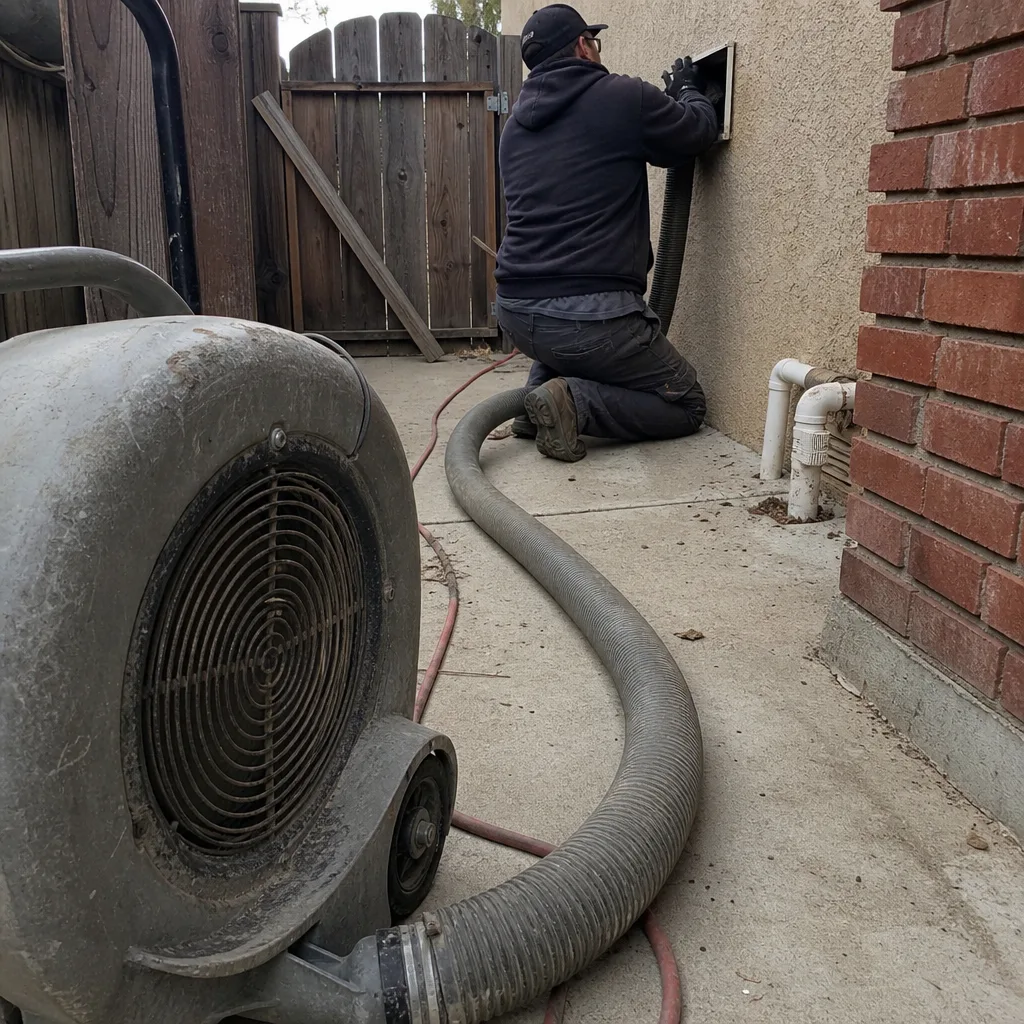 Before
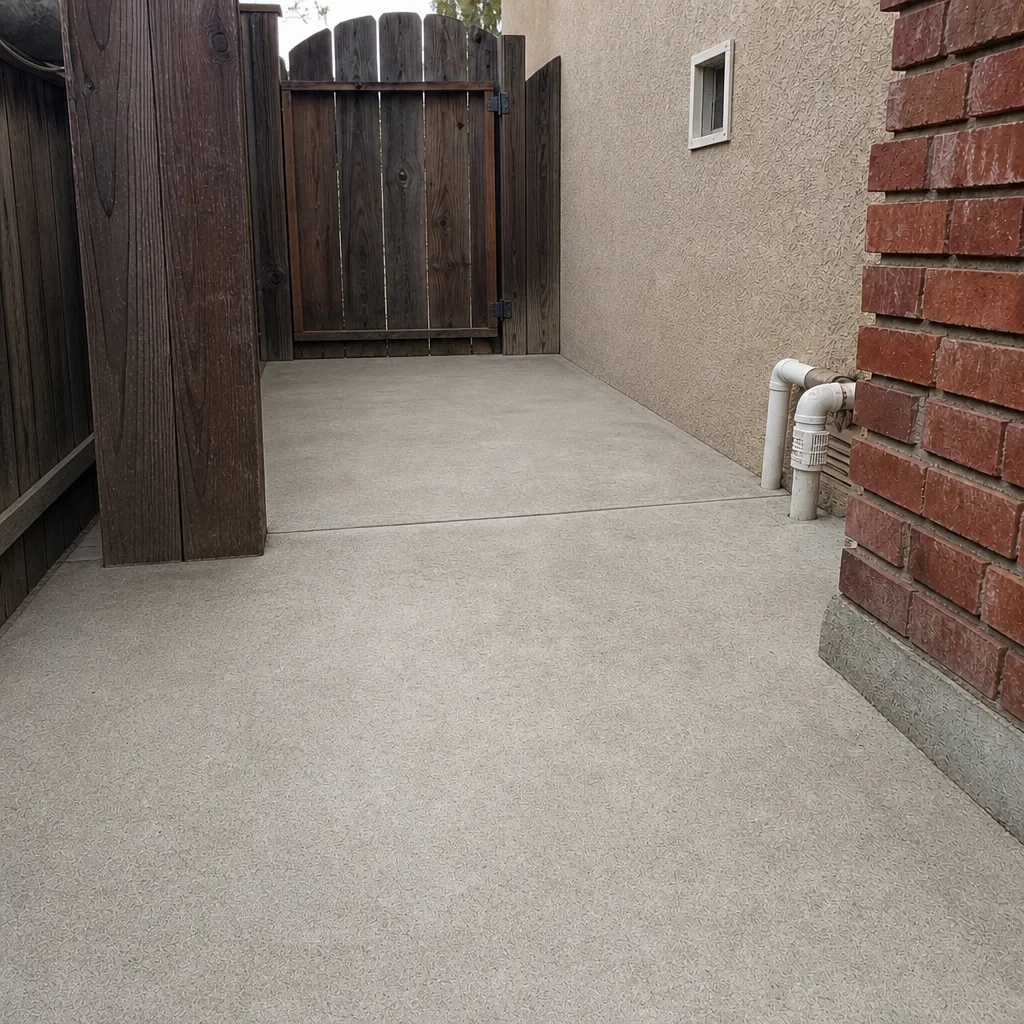 After
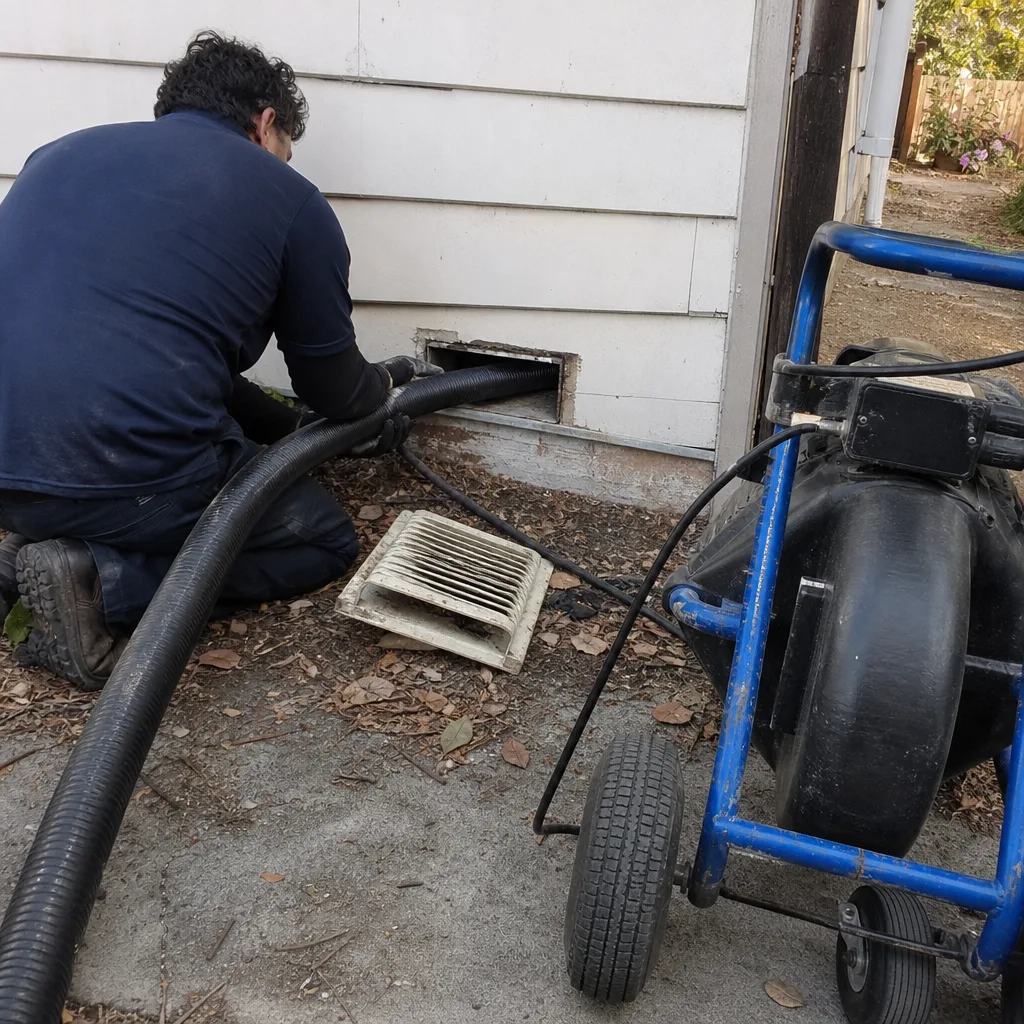 Before
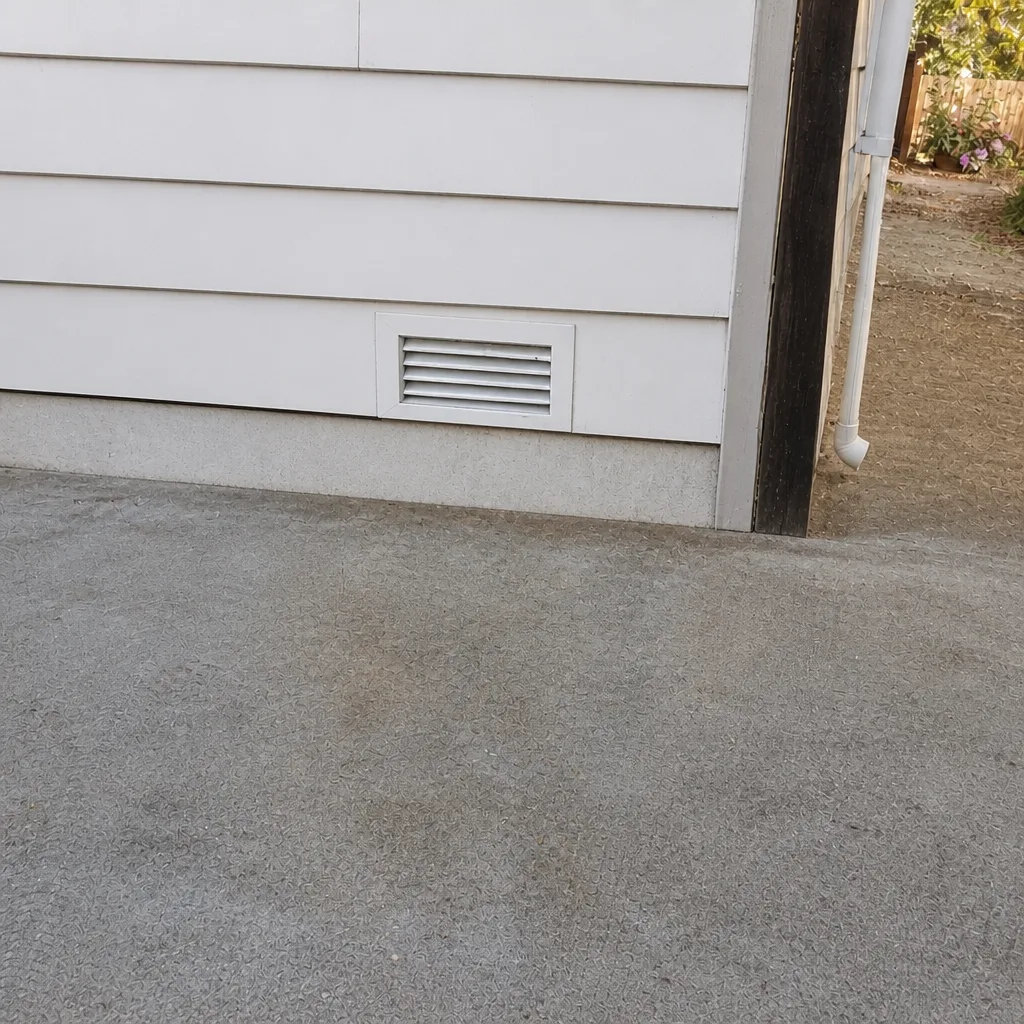 After
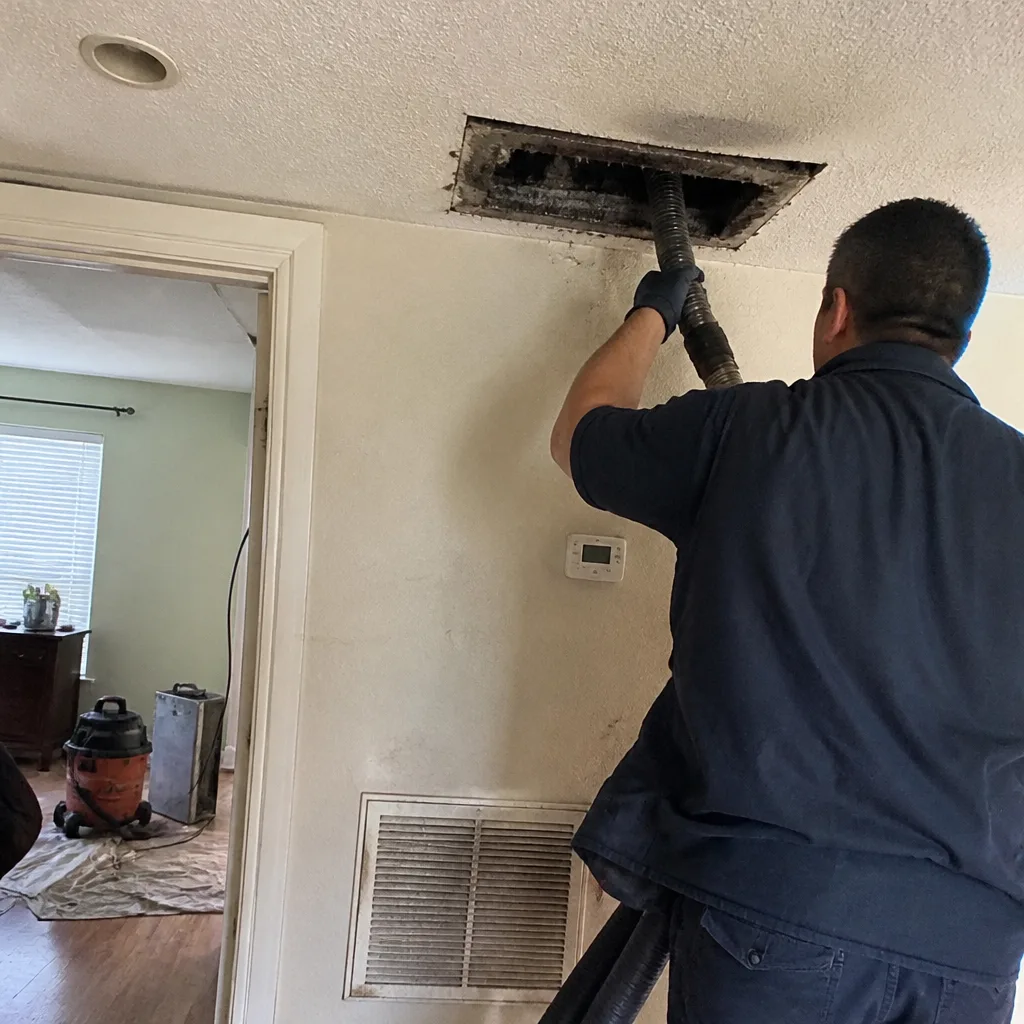 Before
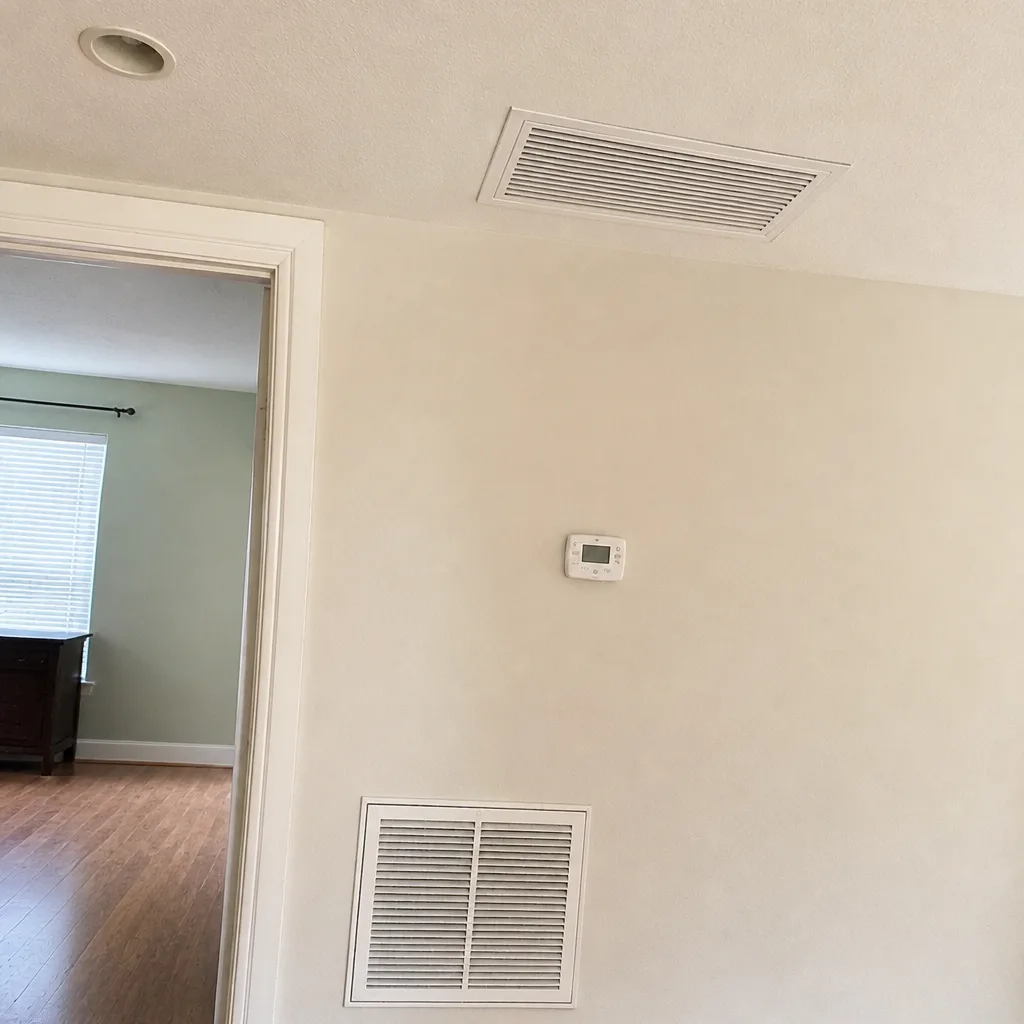 After
When to Call a Professional
Call us if any of the following describe your situation: burning or animal smells at startup (immediate), visible debris or dark staining at the return grille, filters loading in less than half their rated interval, one side of the house consistently losing the temperature battle, condensation at registers in summer, or a recent renovation that finished without a duct inspection in a Vacaville home. Any of those signals is worth a look. None of them is worth a panic. Duct Cleaning Vacaville offers free estimates in Vacaville. Call (888) 293-3839. We answer 24/7. Fast dispatch from 7am to 7pm, Sunday through Friday. The estimate is written before work starts, itemized by system, with no per-vent pricing.
Frequently Asked Questions
Pricing depends on the size of the system, how many supply and return runs it has, and whether repair is needed. A typical residential whole-system cleaning is quoted as a single flat price per system after an on-site estimate, with no per-vent charge. That flat-price-per-system structure is the industry’s answer to bait-and-switch coupons, and it’s what you should insist on. Call (888) 293-3839. Estimates are free, and we answer 24/7.
Cheap quotes usually mean the work is either not whole-system or not done with professional-grade equipment. A shop vac and a hose can’t reach into the full trunk and branch runs, and it can’t capture fine particulate like drywall dust or insulation fiber. Professional setups (Rotobrush, Nikro, and an Abatement Technologies air scrubber during service) use equipment that runs about a hundred times the airflow of a shop vac. That equipment has a cost, and it’s reflected in a real quote. Call (888) 293-3839 for an honest comparison.
Ask for before-and-after photos of your own ducts, not stock photos. A legitimate technician will always be able to show the actual trunk and return runs before and after the work, plus a summary of what was removed. Call (888) 293-3839 and ask us up front what documentation we provide. Estimates are free, and we answer 24/7.
Not on a clock. The right answer depends on your specific warning signs: filter loading rate, odor presence, condensation, post-renovation dust, and the general condition of the return system. If none of those are present, cleaning can wait. If several are present, it shouldn’t. Honeywell and Aprilaire air quality systems integrate well with cleaning for homes that want a longer interval between cleanings. Call (888) 293-3839 to talk through your specific signs with a technician.
Mild symptoms are exactly the ones worth inspecting, because they’re the earliest signals and they’re the cheapest to resolve. A small return leak caught in May is a cleaning and a repair. The same leak in October, after a full summer of moisture, can mean mold remediation. Call (888) 293-3839 and ask for the inspection before anything else. Estimates are free.
Yes. Full-scope capability covers cleaning, dryer vent clearing, and repair, so a disconnected or crushed run identified during the cleaning can be repaired on the same visit. That matters because cleaning around a broken run means the contamination recurs. Call (888) 293-3839 to book a single-visit inspection, cleaning, and repair.
The Bottom Line
The warning signs that matter in a Vacaville duct system are the quiet performance signals, not the dramatic visible ones. Airflow asymmetry, filter loading rate, odor character, post-renovation dust migration, and summer condensation each point to a specific condition, and each is easiest and cheapest to resolve early. Document what you’re seeing, ask for a written estimate before any work is scheduled, insist on professional-grade equipment and before-and-after photos, and treat the return side of the system as equal to the supply. Those five habits protect you from the two problems in this trade: waiting too long and paying for half a job. Call (888) 293-3839. We answer 24/7. Fast dispatch from 7am to 7pm, Sunday through Friday. Free estimates in Vacaville, flat pricing per system, and same-visit repair when the inspection finds a broken run.
Written by the team at Duct Cleaning Vacaville.