
Last updated November 15, 2026
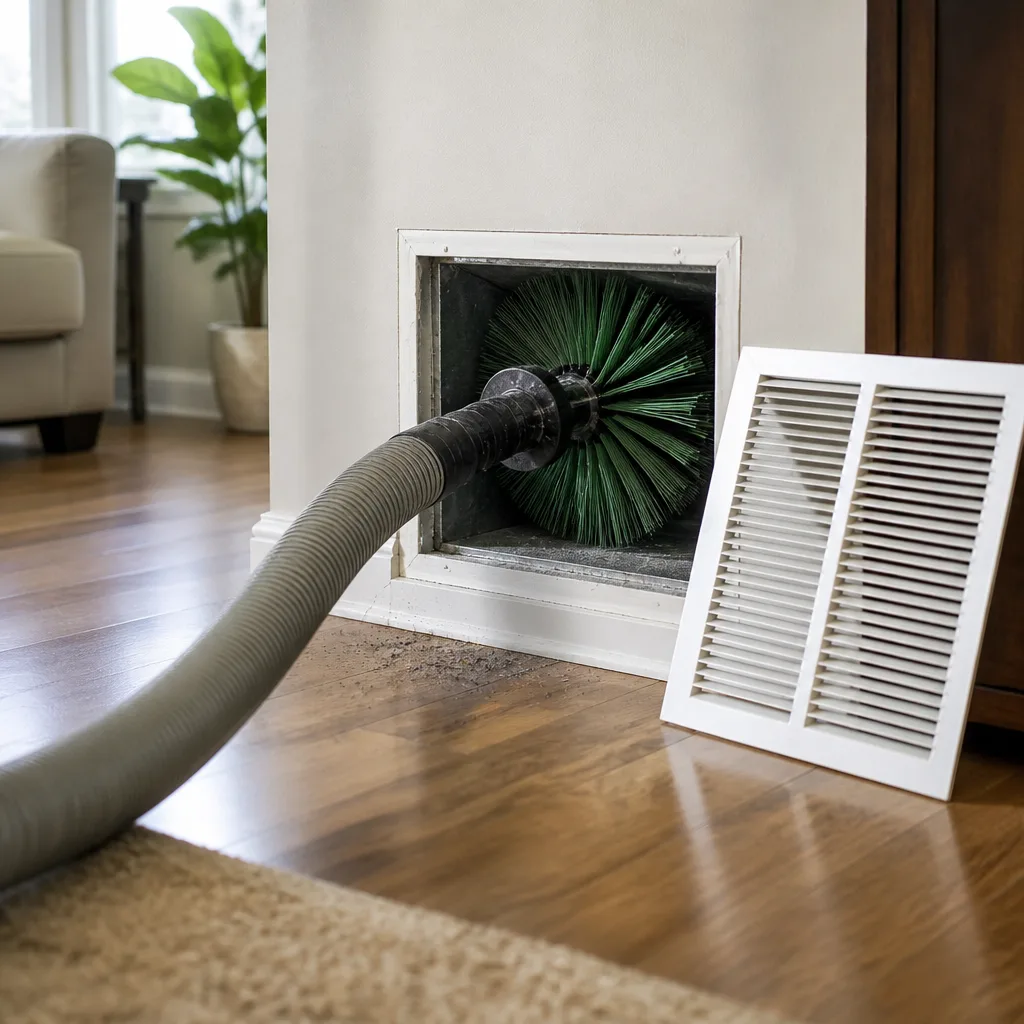 Whole-home duct cleaning
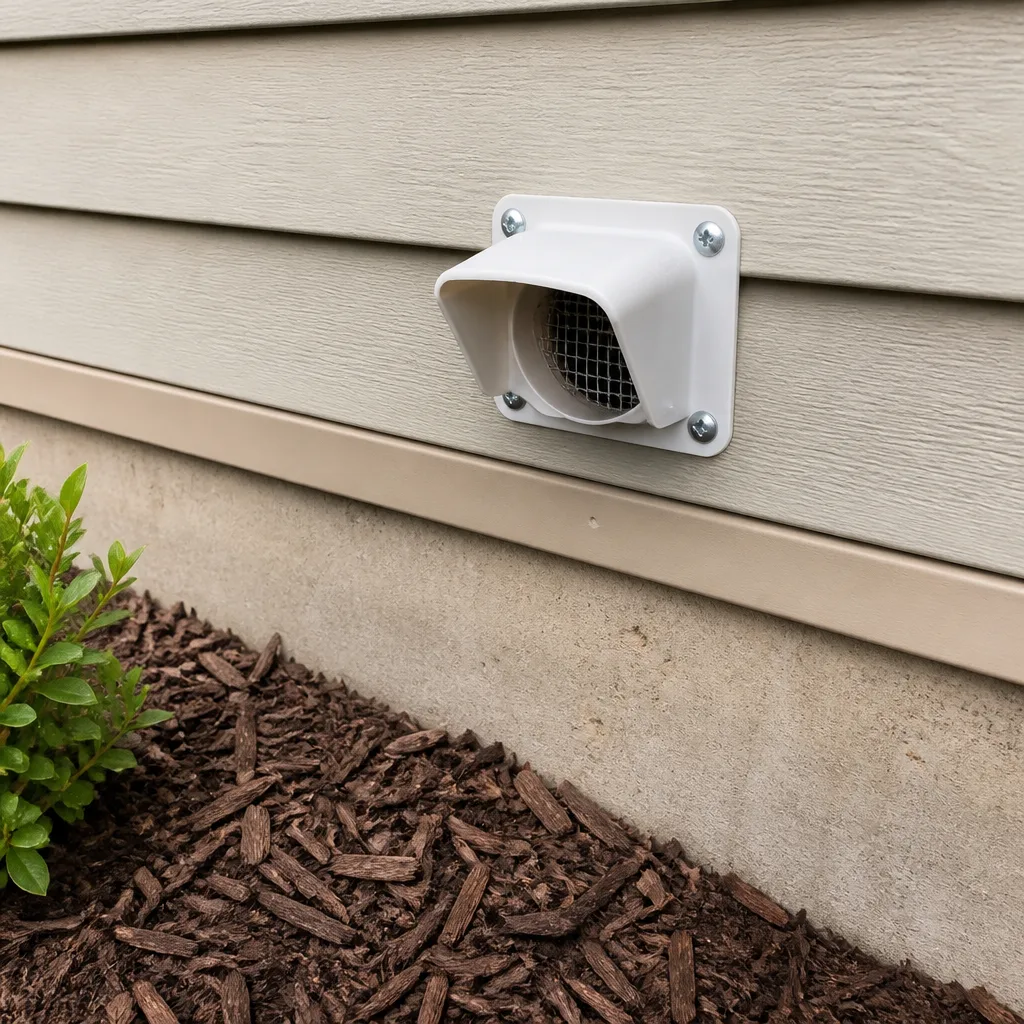 Dryer vent cleaning
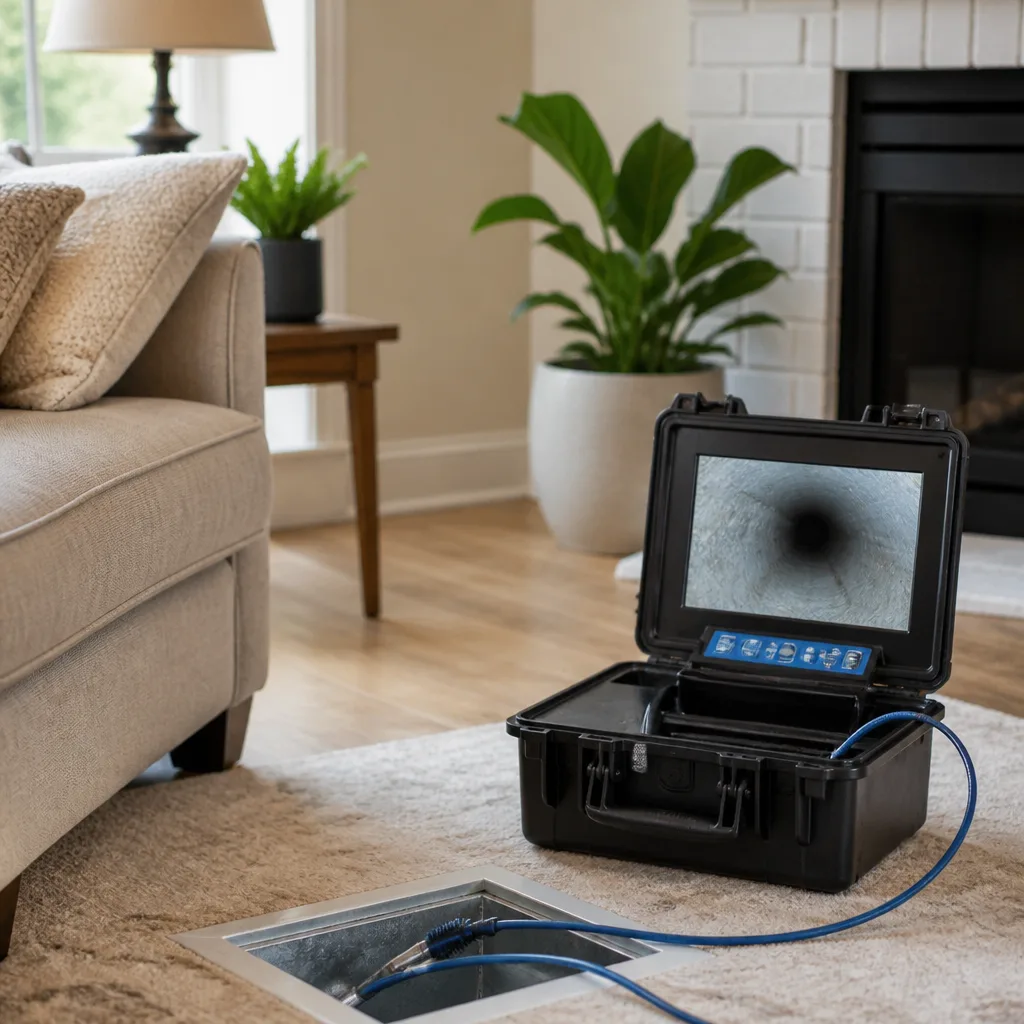 Camera inspection
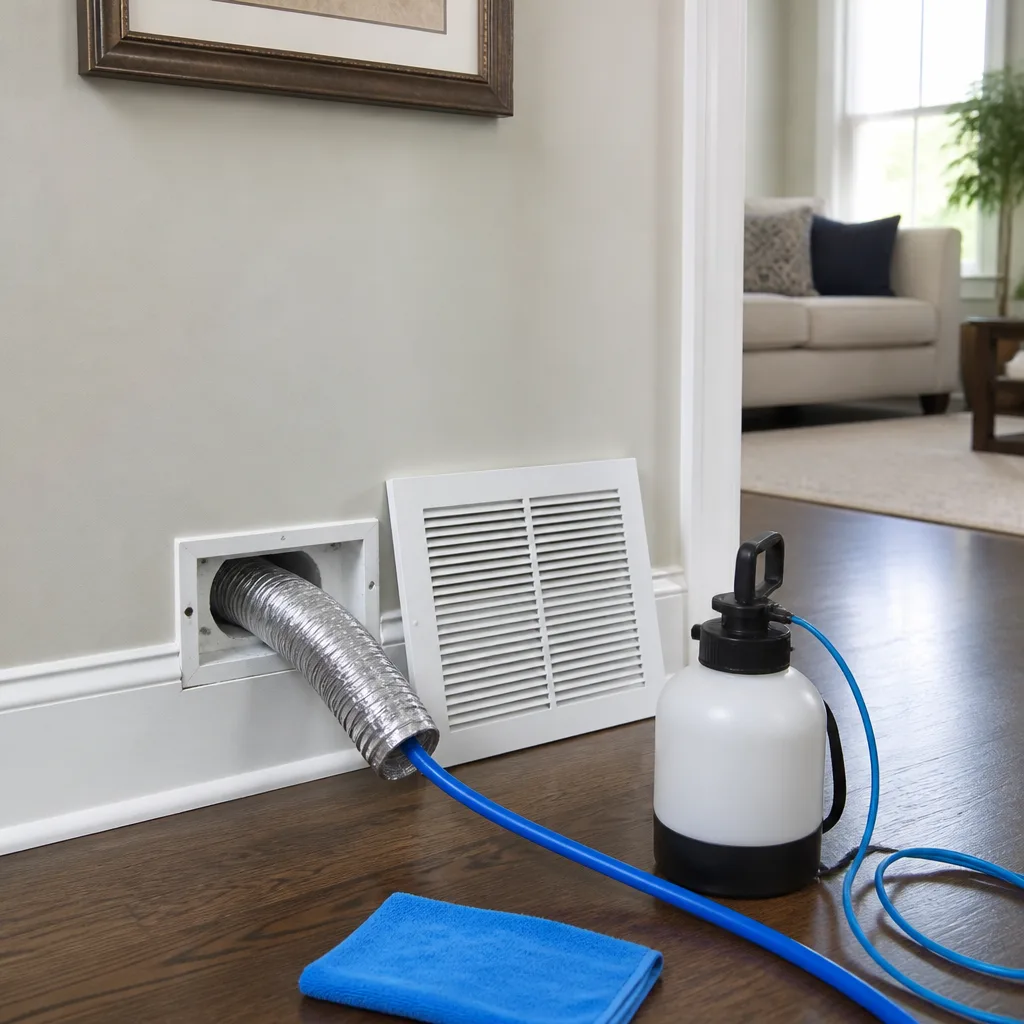 Sanitizing & deodorizing
Whole-system duct and dryer vent check with before-and-after photos - you see exactly what came out of your vents
That "$99 whole-house special" is a bait ad - the real number appears once they are in your hallway, or the "clean" is a shop-vac at the register. We photograph the inside of your ducts before and after instead.
Air Duct Cleaning Troubleshooting in Vacaville: Common Problems and How to Fix Them
If your ducts were cleaned six months ago and your house still smells like a wet basement, the cleaning probably didn’t fail. The diagnosis did. That’s the part almost nobody explains before they sell you a cleaning: weak airflow, dust that settles right after a wipe-down, a musty smell from the supply registers – these are symptoms, and each one has more than one possible cause. Treated as standalone issues, they waste money. Read correctly, they tell you exactly which system is misbehaving. This guide teaches you to read your own system the way a technician does in Vacaville: what to look at, what it means, and when the fix is cleaning, repair, or something outside the ducts entirely.
Quick Answer
Most air duct problems in Vacaville fall into one of three buckets: debris that cleaning can remove, damage that cleaning can’t fix (liner tears, disconnected joints, leaks), or issues that have nothing to do with the ducts at all – a dirty evaporator coil, a struggling air handler, or building envelope gaps that let dust and humid air in. Troubleshooting correctly means identifying which bucket you’re in before you spend a dollar. A proper technician diagnosis, with airflow checked at the registers and the trunk looked at directly, separates those three every time.
Styles & brands we work with
- Whole-home duct cleaning
- Dryer vent cleaning
- Camera inspection
- Sanitizing & deodorizing
Table of Contents
- Duct Problem vs. HVAC Problem vs. Building Envelope Problem
- Persistent Dustiness After a Cleaning: What It Usually Means
- How to Check Whether Your Last Cleaning Actually Reached the Main Trunk Lines
- Why Musty Smell After Cleaning Points Somewhere Other Than the Ducts
- A Symptom-to-Cause Matrix for Vacaville’s Climate
- Weak Airflow at Some Registers but Not Others
- When the Answer Is Repair, Not Cleaning
- Dryer Vent Symptoms That Look Like Duct Problems
Duct Problem vs. HVAC Problem vs. Building Envelope Problem
This is the fork in the road that saves the most money. Nearly every complaint that brings a homeowner to search “air duct cleaning problems Vacaville CA” traces back to one of three systems – the ducts, the HVAC equipment, or the building envelope – and the symptoms overlap heavily. You don’t need tools to start narrowing it down. A little observation goes a long way.
Run these checks in order. Each one eliminates a category.
- Run the fan only. Set the thermostat to fan-on with the heat and cooling off. If the airflow feels weak at the registers now, the problem is in the path – the ducts, the filter, or the blower. If airflow feels fine on fan-only but drops when the system is actually heating or cooling, the equipment or coil is more likely involved.
- Follow the dust. Wipe a shelf and a returned air grille. If the shelf dust returns quickly but the return grille is clean, air is bypassing your filter. If the return grille is caked, the filter is undersized or being ignored.
- Check the envelope edges. Dust streaks along the base of walls near exterior doors and around old window frames are envelope clues, not duct clues. So is a single room that stays humid or dirty no matter what the system does.
- Compare rooms. One weak register in one room, with everything else strong, usually points to that branch duct – a crushed section, a closed damper, or a disconnected joint. Whole-house weakness points to the main trunk or the blower.
What we’ve learned running these systems in Vacaville is that the dry summer heat and the fog that rolls in from the valley west combine to make envelope gaps more visible in household dust than you’d see in a drier inland market. Homes near the older downtown grid and the established neighborhoods around Alamo Drive tend to show more of this than newer construction. If your quick checks point to the envelope or the equipment, that’s a different call than a duct cleaner – though a duct cleaning can still be part of the answer if the return side is genuinely loaded.
Persistent Dustiness After a Cleaning: What It Usually Means
If your house is dusty again within two weeks of a cleaning, three causes account for nearly all cases: a dirty evaporator coil, bypass leaks that let unfiltered air into the return, or return-side contamination the previous technician never reached. Dustiness is a signal, not a verdict, and the fix depends entirely on which of those three is true.
The evaporator coil is the part of the indoor unit the air passes over before it heads into your ducts. When it’s coated, air moving over it picks up fine particulate and deposits it throughout the supply side. A duct cleaning won’t fix that, because the coil stays dirty. Look for it if your dust returns fast after cleaning and your system has not had the coil looked at in a long while.
Bypass leaks are gaps at the air handler cabinet, at the filter slot, and at duct joints near the unit. They let unfiltered air from an attic or closet pull straight into the return and out into the house. A cleaning won’t fix those either. Our technicians check these joints as part of any service, because there’s no point cleaning a system that’s pulling dust in from a gap.
Return-side contamination is the most common miss. Many cheap cleanings focus on the supply registers and the supply trunk because those are visible from the room. The return trunk – the larger duct carrying air back to the unit – is where a lot of the debris sits. If the return side was never touched, you have a clean supply and a dirty return, and the house stays dusty. If that’s the story, a proper whole-system clean is the fix, not a second opinion from someone with a shop vac. You can read more about what a proper clean involves on our Duct Cleaning Vacaville service page.
How to Tell Which of the Three You Have
- Dust returns in days. Lean toward coil or bypass. The ducts may be fine.
- Dust returns in a couple of weeks and the return grille is grimy. Lean toward return-side contamination that was never cleaned.
- Dust returns unevenly – one room always worse. Lean toward a leak in that branch or a branch that isn’t sealed at the boot.
- Dust is fine, but the air smells. That’s a separate symptom – see the musty smell section.
How to Check Whether Your Last Cleaning Actually Reached the Main Trunk Lines
You can verify a cleaning without calling anyone: ask for before-and-after photos of the trunk lines, not just the registers. Registers are the easiest part of any cleaning and the least informative. If the only photos you were shown were of vents, the work likely stopped at the branches. The trunk is where the cleaning either happened or didn’t.
Here’s the sequence a technician runs, and what to look for:
- The unit is opened and the coil is examined. A serious cleaning starts at the air handler cabinet. If the technician never opened anything, they cleaned from the outside only.
- The return trunk is cleaned first. Return air is the dirtiest air in the system. Cleaning the return after the supply just re-dirties what you just cleaned.
- The main supply trunk is reached with a contact tool. This is where professional equipment matters. A rotary brush system runs through the trunk to knock debris loose along the walls. A hose with a vacuum head alone cannot do that.
- Negative pressure is maintained while the work runs. A vacuum keeps the debris moving out rather than into the room. This is where an Abatement Technologies air scrubber and containment setup matter for the house, and where a shop vac falls short.
- Photos are taken before, during, and after – of the trunk, not the vents. That’s the proof of work. If the photos aren’t of the trunk, ask why.
What we see in Vacaville is that the summer dust and agricultural particulate around the north end of town builds up inside trunks faster than most homeowners expect. If a “cleaning” happened six months ago and the trunk looks caked, it didn’t happen. A rotary contact clean with real negative pressure is what removes that – professional-grade equipment, not a shop vac and a hose. For a fuller explanation of what a system-level clean includes, see air duct cleaning.
Why Musty Smell After Cleaning Points Somewhere Other Than the Ducts
A musty smell that lingers after a cleaning almost never comes from the ducts themselves. It usually points to one of four things: liner damage inside the ducts, moisture intrusion from the building envelope, an untreated evaporator coil, or a return path pulling air from a damp crawlspace or attic. Cleaning doesn’t remove a smell it didn’t cause in the first place, so a second cleaning is usually the wrong spend.
Start by finding the pattern.
- Smell only when the fan runs, then fades after the fan stops. Points to the air path – coil or ducts. Start with the coil.
- Smell worst in one room, faint elsewhere. Points to a branch or a boot connection near that room. Check the register boot for a gap.
- Smell worst in the morning, fades midday. Points to humidity in the envelope or crawlspace. The overnight valley fog that cycles through Vacaville in spring and fall can leave a crawlspace damp without any duct leak at all.
- Smell worst right after a rain. Envelope, or a duct run passing through a damp space that has lost its vapor handling.
Liner damage inside a flexible duct is the case most often misdiagnosed as “dirty ducts”. A torn liner doesn’t show up from the register, and no amount of cleaning will remove the smell because the torn liner edge is the smell. That’s a repair, not a cleaning, and it’s one of the reasons we offer duct repair alongside cleaning – we can fix what we find. The evaporator coil is the other common culprit. A coil that’s growing biological matter will smell every time the blower runs, and cleaning the ducts won’t help. Our technicians use Nikro equipment rated for commercial work, and we integrate with Honeywell and Aprilaire whole-home air quality systems when the fix is filtration rather than cleaning alone.
A Symptom-to-Cause Matrix for Vacaville’s Climate
Vacaville has a specific sequence of seasonal pressures that pushes different duct problems to the surface at different times of year. Hot, dry summers load the system with airborne soil and agricultural particulate, the fog cycle through the valley adds humidity swings in spring and fall, and the long heating season concentrates dust at the supply registers. Matching the timing of your symptom to the season cuts the diagnosis in half.
| Symptom and Timing | Most Likely Cause | What to Do |
|---|---|---|
| Dust returns fast in late summer | Coil load from dry-season particulate, or return-side contamination | Ask a technician to check the coil and the return trunk |
| Musty smell in spring or fall mornings | Humidity from the valley fog cycle reaching the envelope or a crawlspace | Inspect crawlspace and duct runs in damp spaces before booking a cleaning |
| Weak airflow in one room all year | Branch duct damage, closed damper, or disconnected boot | Ask for a branch-by-branch airflow check |
| Dust settles on return grille quickly | Filter bypass or undersized filter | Look at the filter slot and air handler cabinet joints |
| Dust streaks at exterior doors and old windows | Building envelope gaps | Weatherstripping and sealing – not a duct problem |
| Odor only when the fan starts | Coil or liner, not trunk debris | Technician inspection of coil and visible liner |
| Allergy season worse indoors than out | Whole-system filtration and return-side cleanliness | Discuss a Honeywell or Aprilaire integration with a cleaning |
The agricultural dust that circulates near the northern edge of town during dry months is a real load on residential systems, and it settles in ways a homeowner can’t judge from the register. You’ll notice it in the return grille and in the fine film on horizontal surfaces in rooms with the longest supply runs. If that pattern shows up in your house, the diagnosis is likely system-level cleaning plus a filter review, not a quick register clean. We can walk through it for your Vacaville home before anything is scheduled.
Weak Airflow at Some Registers but Not Others
One weak register and one strong one in the same house is almost never a “dirty ducts” problem. That pattern points to a branch-level restriction: a crushed flex run, a damper that got knocked closed, a boot that came loose at the wall, or a length of duct that’s been kinked at a turn. Cleaning the whole system won’t fix a kink. Repairing the branch will.
The check takes a few minutes and no tools:
- Hold a tissue at each supply register while the fan runs. You’re looking for consistent pull across the house. If one register barely moves the tissue, that’s the branch to focus on.
- Check the thermostat for zone dampers. Some systems have a damper handle at the trunk takeoff. If one is closed, no cleaning will change that register.
- Look at the register boot itself. A gap between the boot and the drywall lets supply air leak into the wall cavity, which makes the room feel weaker than the branch actually is.
- Check that the register is fully open. It sounds obvious. It’s also the most common reason someone calls about “weak flow”.
If the whole house feels weak, the check changes. Start at the filter – a filter that’s overdue and clogged starves the entire system. Then the blower wheel. Then the main trunk. A clean filter and a clean blower with weak whole-house airflow points to the trunk, and that’s when cleaning actually is the fix. We see a lot of this in Vacaville when the first hot stretch arrives and the system runs longer than it has all year, and a filter that looked fine in April is suddenly the bottleneck in June. If whole-house weakness comes with a musty smell, go back to the musty smell section – you may have two problems.
When the Answer Is Repair, Not Cleaning
Some symptoms can’t be cleaned away. Torn liner, disconnected joints, crushed sections, and failed boots all call for repair, and no amount of professional-grade equipment fixes a physical break. Testing the difference is straightforward: if the symptom survives a proper cleaning, it was never a cleaning problem.
Signs you’re looking at repair rather than cleaning:
- Visible liner damage at the register boot. Torn edges inside a flex run are a repair – the liner is the smell and the leak source.
- Air movement at a joint. Hold your hand at the seam between a branch and the trunk. If you feel air moving, that joint is leaking into the cavity.
- A run that’s crushed or kinked. Common where ductwork passes a joist or turns sharply under a floor. No cleaning changes the airflow through a crushed run.
- Loose register boots. Usually felt as a faint whistle or dust streak at the register edge.
- Condensation staining on duct wrap in a crawlspace or attic. That’s a moisture handling problem, and the answer is sealing and repair.
What makes this harder than it should be is that many companies quote the cleaning, then find the tear mid-job, then leave. We don’t – because we clean and we repair, one call closes the loop on your ductwork. If a technician finds a disconnected joint on your system, we can fix it in the same scope, which is what a lot of Vacaville homeowners have told us they wish had happened the first time. Air you can’t see deserves people willing to open the cabinet and look, not just a hose at the vent. If your report from another company flagged repair that nobody scheduled, our duct repair service picks up where that left off.
Dryer Vent Symptoms That Look Like Duct Problems
Some of the symptoms homeowners bring to an air duct call actually belong to the dryer vent – and that matters, because dryer vent buildup is a documented fire risk, not just an airflow annoyance. If your laundry room is humid, the dryer takes two cycles to finish, or clothes feel warm and damp at the end, check the vent before you book anything else.
The symptoms that overlap with duct problems:
- Persistent lint in the laundry room. That’s vent-side lint escaping, not HVAC particulate.
- Humidity that stays in one part of the house. A clogged dryer vent dumps moisture into the laundry room. It can read as an “airflow problem” because it feels like stale air.
- Musty smell near the laundry. Blocked vent flow plus humidity is a common combo.
Dryer vent buildup is a leading cause of house fires. That’s why we treat dryer vent cleaning as a real service, not an upsell. The check takes minutes – pull the dryer forward, disconnect the flexible section behind it, and look for lint packed at the transition. If it’s dense, the whole run needs clearing with a rotary brush tool, which is the same equipment approach we use on HVAC trunks. If it’s clear and the dryer still underperforms, the vent isn’t the problem, and it’s better to know that before booking an air duct appointment.
Common Mistakes to Avoid
- Booking a cleaning to fix a smell. Cleaning removes debris. A smell is usually the coil, liner damage, or envelope humidity – and a cleaning won’t touch any of those. Diagnose first.
- Accepting register photos as proof of work. Registers are the easiest part of the system to clean. The trunk is the work. Ask for trunk photos before, during, and after.
- Assuming “dirty ducts” from the register alone. Registers show the supply side. Return-side contamination is the more common vacuum problem in Vacaville homes, and it isn’t visible from the register.
- Skipping the coil check. A dirty evaporator coil will re-dirty clean ducts in a hurry. If the coil isn’t examined before or during the cleaning, the clean job doesn’t last.
- Ignoring envelope gaps. Dust streaks at exterior doors and old windows are a weatherstripping job, not a duct job. Cleaning ducts in a leaky envelope is money down the drain.
- Confusing dryer vent and duct symptoms. Laundry-room humidity and lint are vent-side. Booking a duct cleaning for a clogged dryer vent leaves the fire risk in place.
- Letting a flagged repair go unsettled. A torn liner or disconnected joint that a technician finds mid-job has to be scheduled, not noted and forgotten. Use a company that cleans and repairs.
See the difference
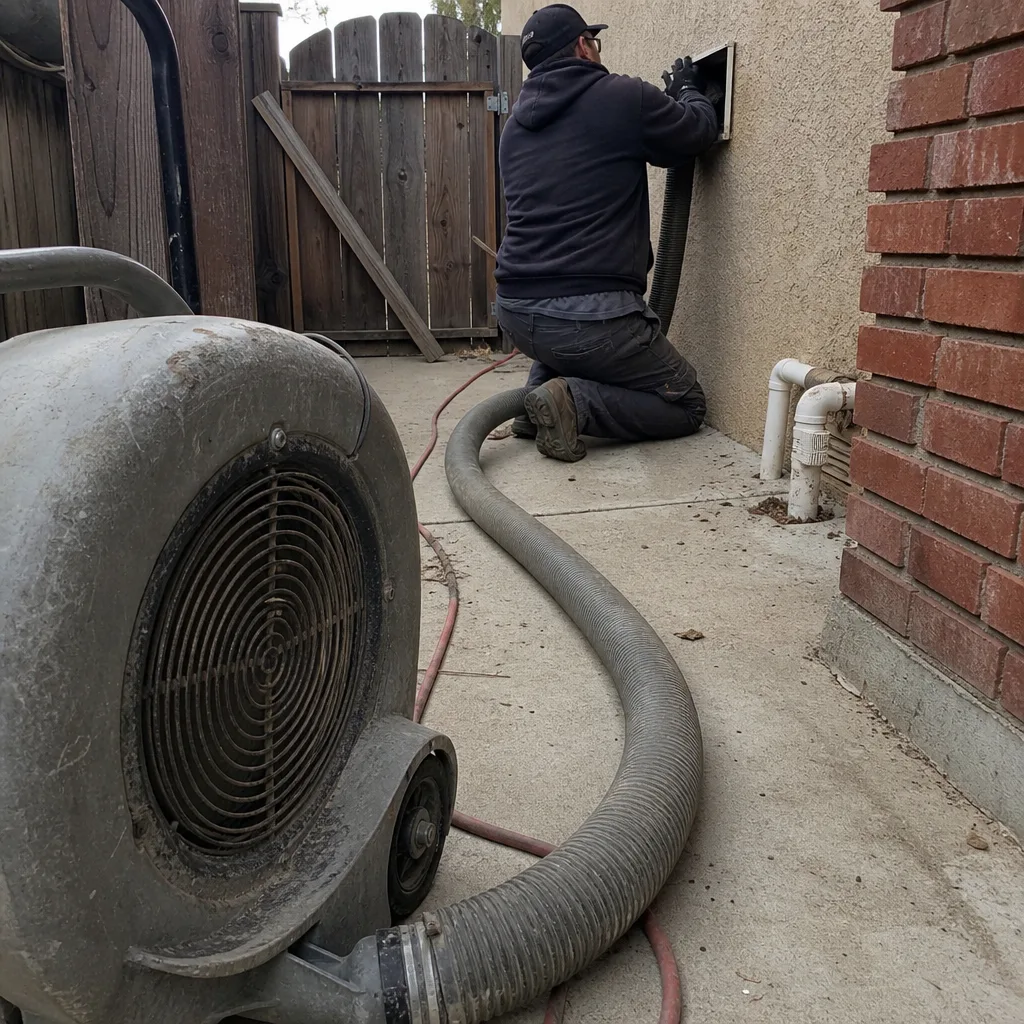 Before
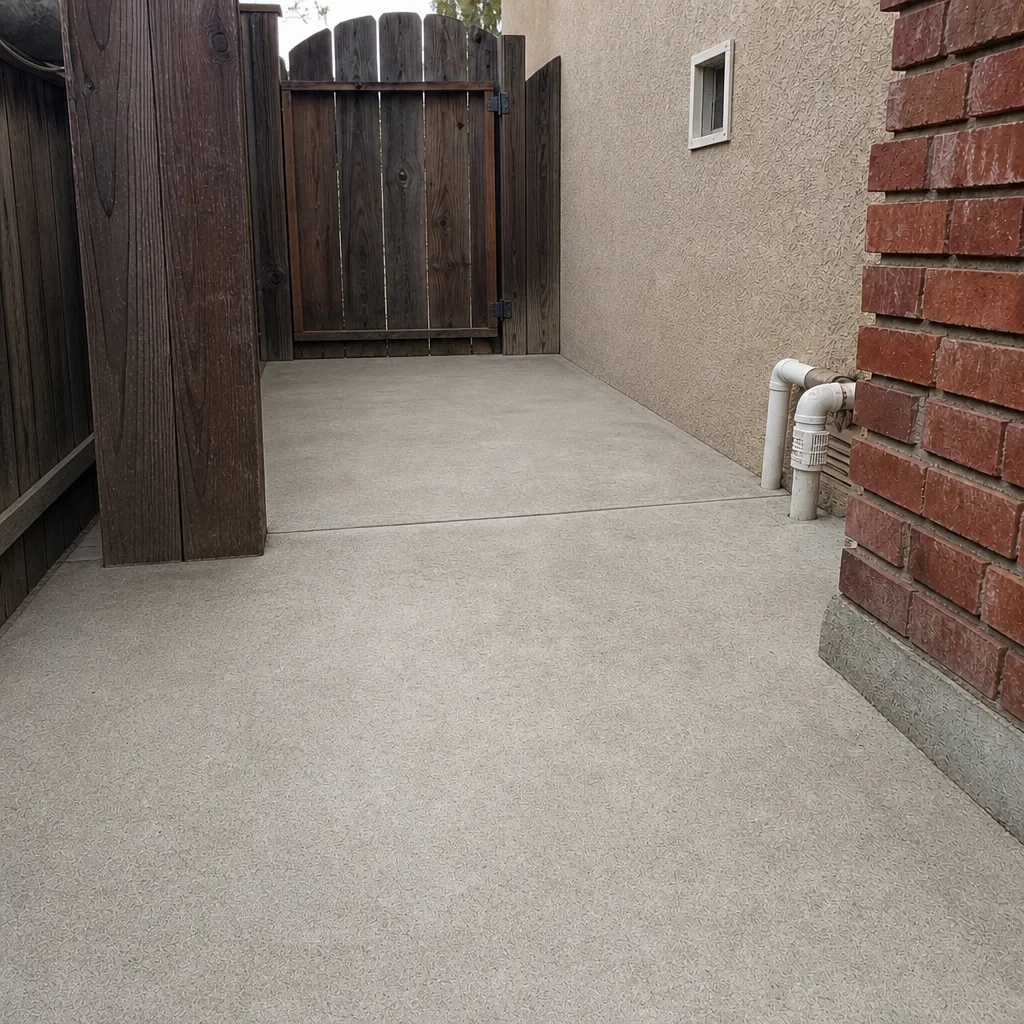 After
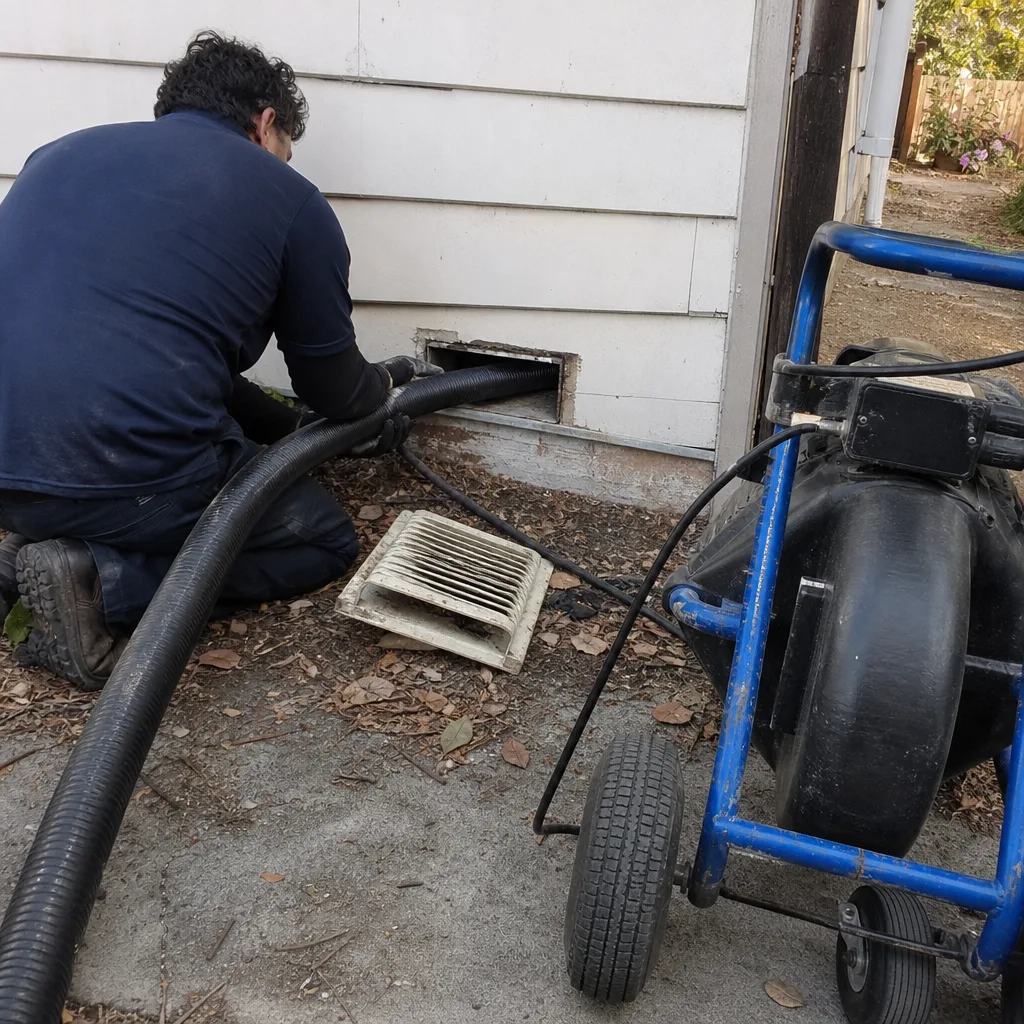 Before
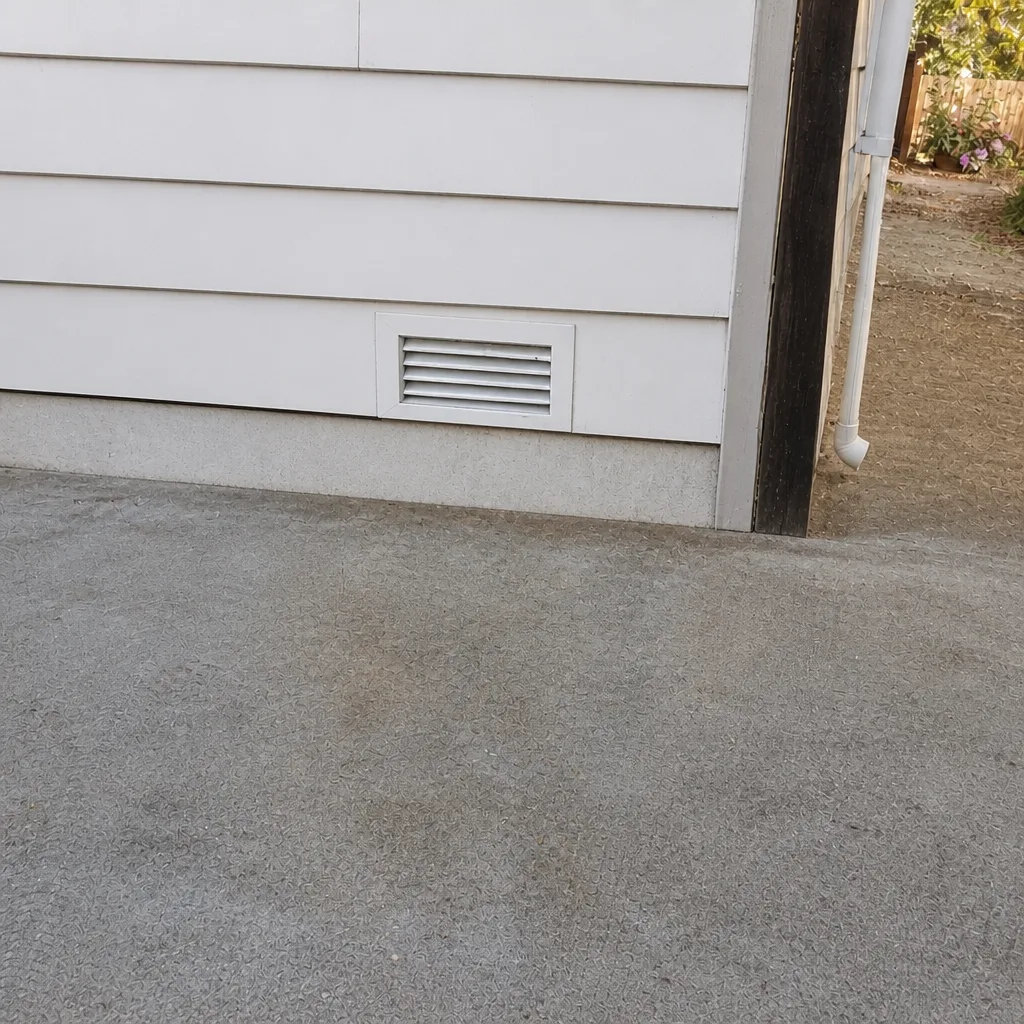 After
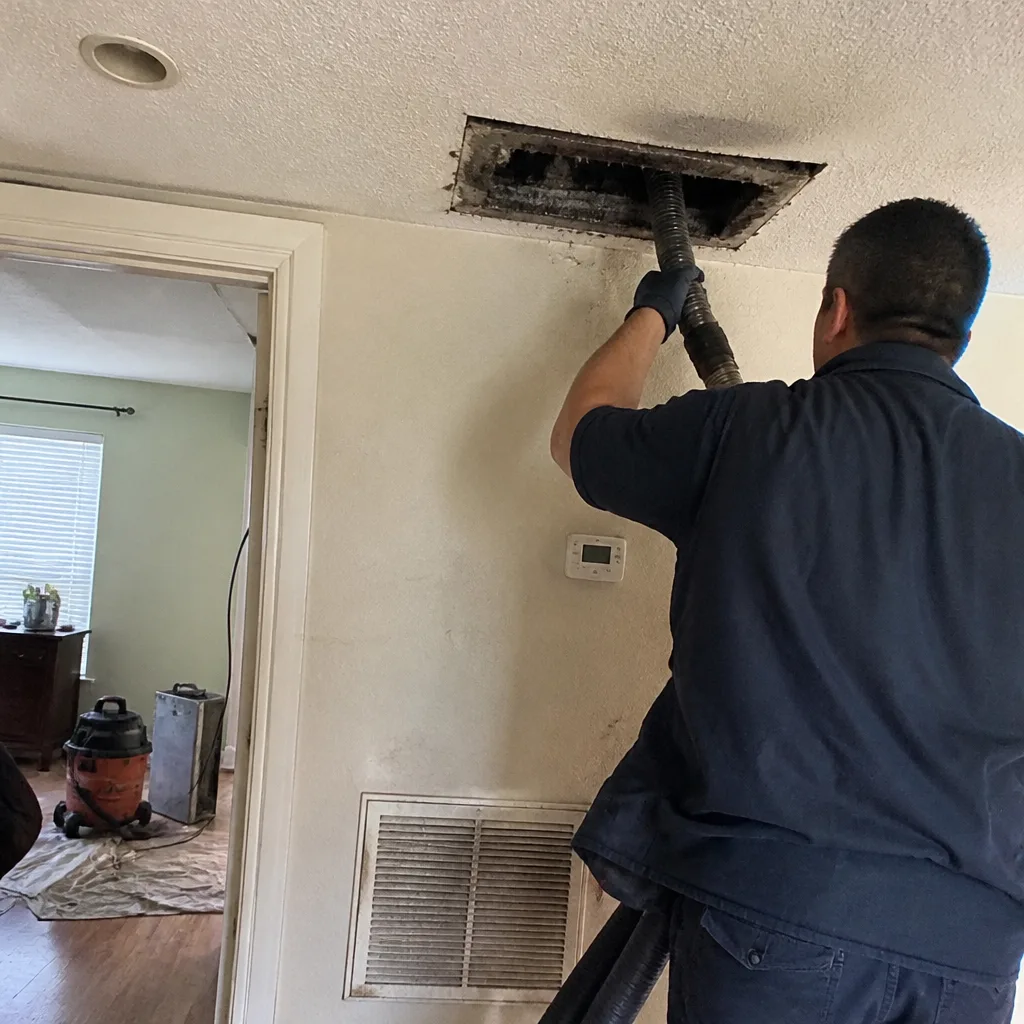 Before
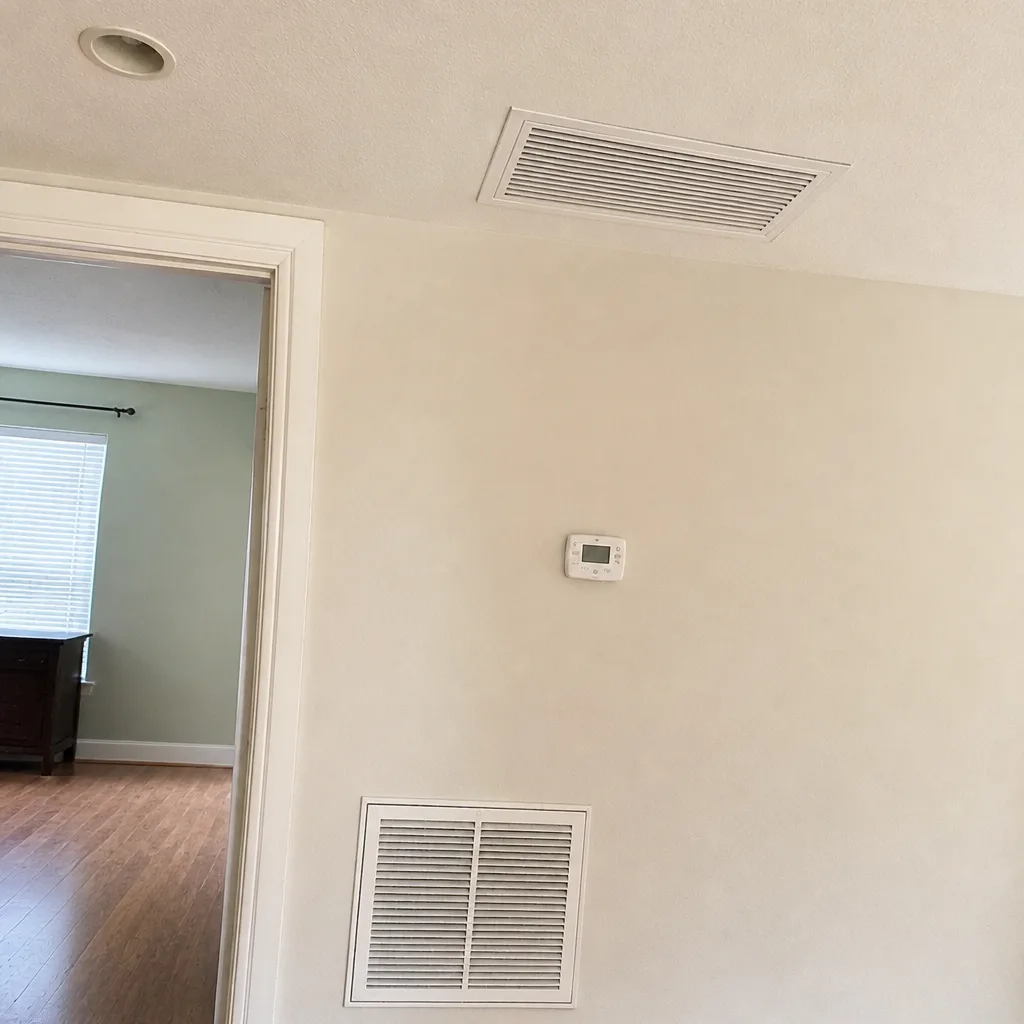 After
When to Call a Professional
Call a professional if any of these are true: the symptom survives a filter change and a full-system fan-only test; you can feel air moving at a duct joint; the musty smell appears only when the fan runs; the whole-house airflow is weak and the filter is clean; or your last cleaning produced no trunk photos. Those are the cases where a diagnosis on site is worth more than any amount of further troubleshooting at home.
Duct Cleaning Vacaville offers free estimates in Vacaville – call (888) 293-3839. We answer 24/7. Fast dispatch from 7am to 7pm, Sunday through Friday. We start with a look at the system to tell you whether the fix is cleaning, repair, or something outside the ducts entirely, and we use professional-grade equipment because the diagnosis is only useful if the work behind it is real. Our technicians have up to 13 years of experience with Rotobrush, Nikro, and Abatement Technologies equipment, and we work with Honeywell and Aprilaire systems when whole-home air quality is the right direction.
Frequently Asked Questions
You need cleaning if the return trunk or the main supply trunk shows visible debris buildup and the register airflow drops when the filter is clean. Dust alone isn’t the signal. Return-side contamination and trunk buildup are, and both are visible to a technician with access to the cabinet and the trunk. If you can’t see the trunk from a register, you can’t diagnose from a register either – have someone look directly. Call (888) 293-3839 for a free estimate – we’ll tell you what we see, in plain terms.
Almost always because the cleaning reached the registers but not the return trunk, or because the evaporator coil or a filter bypass is re-loading the air. Cleaning can only fix what it reaches, so a clean register with a dirty return looks like a failed cleaning and isn’t. The right next step is a diagnostic look at the coil, the return trunk, and the air handler cabinet joints before booking another cleaning. Call (888) 293-3839 to schedule a look.
Not on its own. A musty smell that appears only when the blower runs usually traces to a dirty evaporator coil or a torn liner inside a duct, and cleaning doesn’t fix either – one is a coil cleaning, the other is a repair. Getting the source identified first saves you the cost of a cleaning that doesn’t solve the smell. Call (888) 293-3839 and describe when the smell is strongest – that timing is the biggest clue.
Ask for before-and-after photos of the main trunk, not the registers. Any thorough cleaning documents the trunk and the air handler, because those are the parts that hold the most debris and show real work. If the only photos are of vents, the job likely stopped at the branches. Our team photographs the trunk, return side, and coil cabinet on every job so the homeowner can see exactly what changed. Call (888) 293-3839 if you’d like a second look.
Test one register at a time with a tissue while the fan runs. One weak register means a branch-level duct problem – a kink, a closed damper, or a loose boot. Whole-house weakness with a clean filter points to the main trunk or the blower. The split between those two changes what you should book. Call (888) 293-3839 if you can’t tell which side you’re on – we can often narrow it down over the phone.
It shifts the timing. Dry summer heat and agricultural dust around the north side of town load return systems faster in late summer, and the spring and fall fog cycles push humidity symptoms – mustiness, crawlspace damp – to the surface in the shoulder seasons. The problem types are the same as anywhere; the season you notice them in is a strong clue. If your symptom tracks the weather, note it before you call (888) 293-3839 for a free estimate.
The Bottom Line
Treat your duct symptoms as diagnostic clues, not as a shopping list. Weak airflow at one register, dust that returns fast, a smell only when the fan runs, and a laundry room that stays humid are four different problems with four different fixes – and only one of them is usually solved by a cleaning. Check the filter, test airflow room by room, look at the return grille and the register boots, and ask for trunk photos if anyone has cleaned your system before. That sequence saves the most money. When the checks point inward, call (888) 293-3839 for a free estimate. We answer 24/7. Fast dispatch from 7am to 7pm, Sunday through Friday. Our technicians have up to 13 years of experience, and we clean, repair, and clear dryer vents – one call closes the loop on your ductwork.
Written by the team at Duct Cleaning Vacaville.